Last updated on 2025-05-13





Program overview
Secure global networks and protect critical data with New York Tech’s Master of Science in Cybersecurity. This program empowers you to combat cyber threats, limit risks, and develop recovery strategies through cutting-edge education and hands-on experience. Designed for students with a background in engineering or computer science, the program equips you with the skills to design, implement, and maintain robust security systems across multiple operating systems. You will explore advanced topics such as algorithm concepts, computer forensics, risk management, legal issues, intrusion detection, and hacker exploits, all while learning from expert faculty who are pioneers in the field.
Program structure
The Master of Science in Cybersecurity program can be completed in as few as 1.5 years. Students have the flexibility to choose from two different delivery options:
- Traditional face-to-face courses at New York Tech’s Vancouver campus.
- Online asynchronous courses that can be completed on your own schedule (available for Canadian citizens or permanent residents only).
Additionally, there are two paths to completion:
- Course-based: 30 Credits, including 7 Required Courses, 2 Electives, 1 Project, and Professional Practice.
- Thesis-based: 30 Credits, including 4 Required Courses, 2 Electives, 4 Thesis, and Professional Practice.
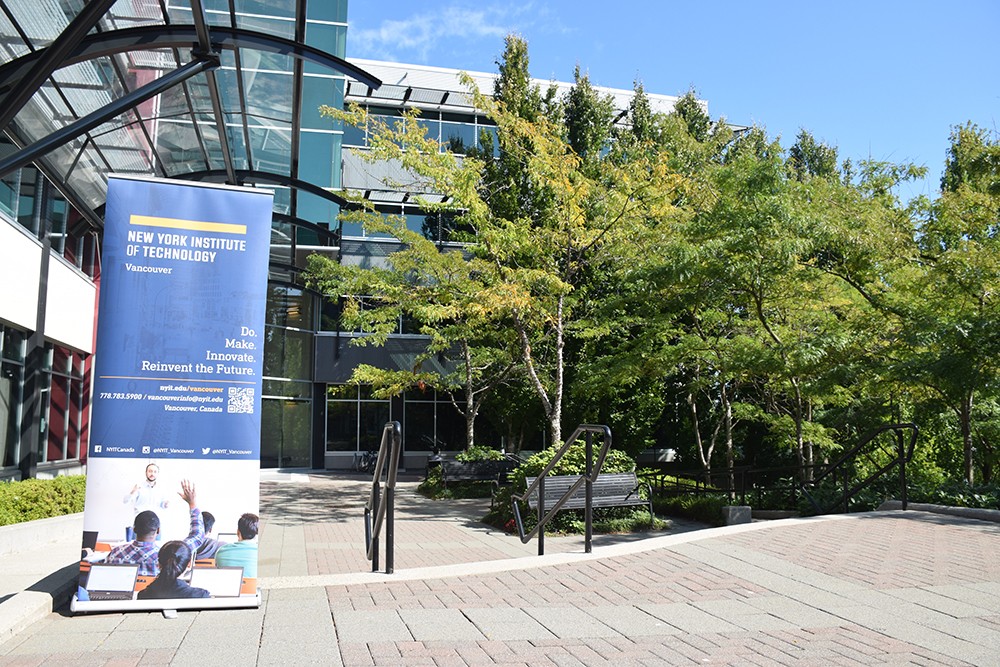
The program emphasizes practical, hands-on learning through projects and research opportunities, supported by state-of-the-art facilities at the Broadway Tech Centre campus in Vancouver. Students also have the option to transfer between the New York and Vancouver campuses, enhancing their educational experience.
Featured Experiences
The Master of Science in Cybersecurity program offers several unique features that enhance the learning experience:
- Co-op Work Experience: This program provides academic credit for paid, structured job experiences, allowing students to alternate school terms and summers with work periods.
- Hands-on Projects: Students engage in practical projects that prepare them for high-demand cybersecurity roles.
- Research Opportunities: Collaborate with expert faculty on cutting-edge research in areas like biometrics, cryptography, and cyber behavioral authentication.
- Flexible Learning Options: Choose between traditional classroom settings or online asynchronous courses.
- International Work Opportunities: International students can work off-campus during their studies and qualify for post-graduation work permits for up to three years.
Career Options
Graduates of the Master of Science in Cybersecurity program can pursue a variety of career paths in Canada, including:
- Cybersecurity Specialists: Protect organizations from cyber threats by implementing security measures and monitoring systems.
- Network Administrators: Manage and maintain computer networks, ensuring security and efficiency.
- Information Systems Managers: Oversee IT projects and teams, ensuring that information systems meet organizational needs.
- Cybersecurity Engineers: Design and implement secure systems and networks to protect sensitive data.
- Cyber Threat Analysts: Analyze and assess potential threats to an organization’s information systems and develop strategies to mitigate risks.
- Security Analysts: Monitor and respond to security incidents, ensuring the integrity of information systems.
DISCLAIMER: The information above is subject to change. For the latest updates, please contact LOA Portal's advisors.
Visit New York Institute of Technology - Vancouver (NYIT) official website