Last updated on 2026-01-07




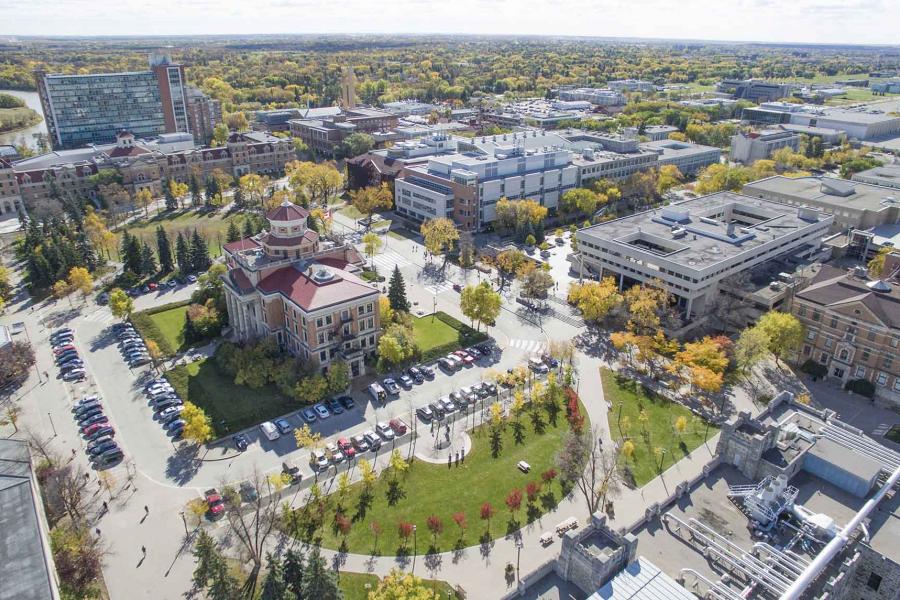
Program Overview
The Bachelor of Science in Astronomy at the University of Manitoba offers students a comprehensive understanding of the universe, from the structure of galaxies to the intricacies of sub-atomic particles. This program emphasizes the study of stellar birth, evolution, and death, as well as the phenomena of cosmic rays and dark matter. Students will engage with both theoretical and practical aspects of astronomy and astrophysics, preparing them for a variety of scientific careers. The program is designed to foster critical thinking and analytical skills, essential for exploring the vastness of space and the fundamental laws governing it.
Program Structure
The Bachelor of Science in Astronomy program is structured to be completed in a 4-year timeframe, assuming a full course load. The program offers various options to cater to different academic interests and career goals:
- Bachelor of Science (Honours) with Co-op Option
- Bachelor of Science (Major) with Co-op Option
- Joint Honours programs with Computer Science, Mathematics, and Chemistry
- Physics and Astronomy Minor
Students have the opportunity to participate in a Co-op program, which integrates academic learning with practical work experience, enhancing their employability upon graduation. The curriculum is designed to provide a solid foundation in both physics and astronomy, allowing students to explore electives from other disciplines, thereby broadening their educational experience.
Featured Experiences
- Access to state-of-the-art research laboratories and equipment, including high-resolution mass spectrometers and a helium liquefier.
- Participation in cutting-edge research projects, with opportunities to work alongside faculty on topics ranging from particle physics to astrophysics.
- Access to international research facilities such as TRIUMF and Jefferson National Laboratory.
- Involvement in the Organization of Physics Undergraduate Students (OPUS), which promotes interest in physics and provides tutoring services.
- Utilization of an on-site planetarium for practical learning experiences.
Career Options
Graduates of the Bachelor of Science in Astronomy program can pursue a variety of career paths in Canada, including:
- Astronomer: Conduct research on celestial bodies and phenomena, often working in observatories or research institutions.
- Astrophysicist: Study the physical properties and behavior of celestial objects, contributing to our understanding of the universe.
- Data Analyst: Utilize statistical and computational skills to analyze astronomical data, often for research projects or government agencies.
- Science Educator: Teach astronomy and physics at various educational levels, inspiring the next generation of scientists.
- Research Scientist: Engage in scientific research within academic or governmental institutions, focusing on various aspects of physics and astronomy.
DISCLAIMER: The information above is subject to change. For the latest updates, please contact LOA Portal's advisors.
Visit UOM - University of Manitoba official website